

From strengthening the economy and creating employment to promoting healthier lifestyles and preserving agricultural traditions, buying local produce can make a meaningful difference.
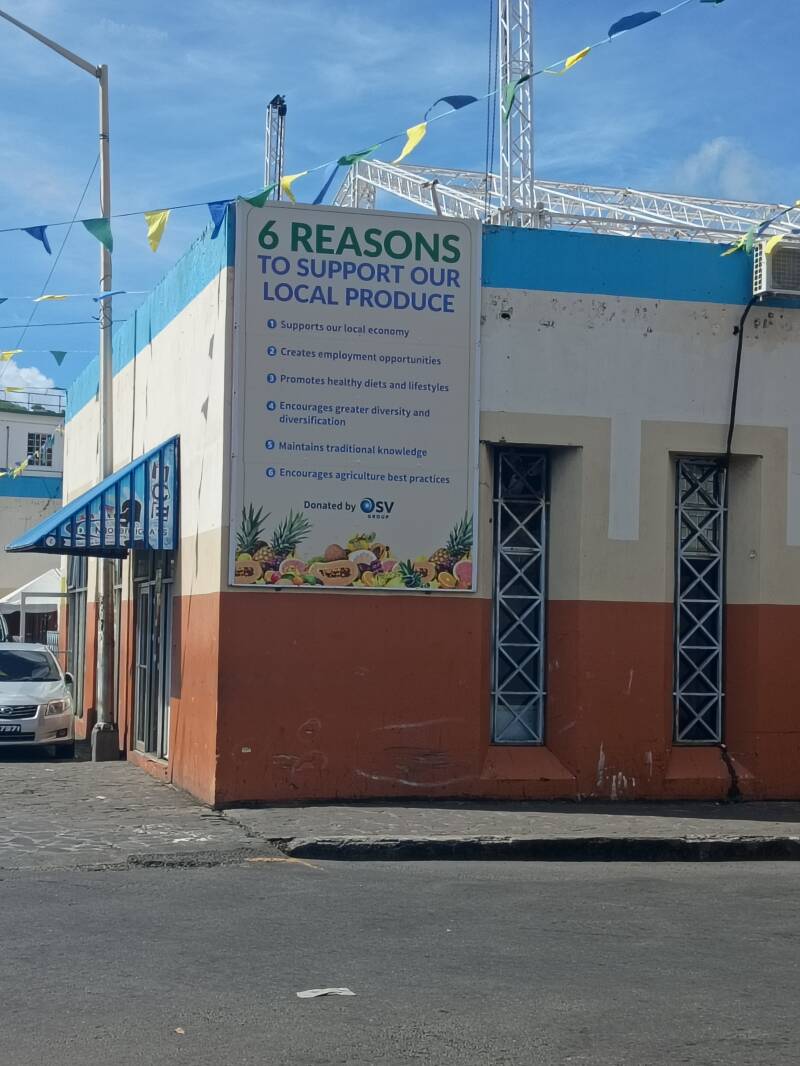
A sign displayed on the wall at Kingstown Market presents a straightforward message: 6 Reasons to Support Our Local Produce.
Although the message is simple, the ideas behind it reach far beyond the market. Supporting locally grown food can influence the economy, employment opportunities, public health, food security, and the long-term development of agriculture in St. Vincent and the Grenadines.
For a country with a rich agricultural history and a variety of tropical crops, local produce represents an important economic and cultural resource. Understanding its value helps explain why encouraging consumers to purchase locally grown products remains relevant.
Here are six reasons why supporting local produce deserves attention.
1. It Supports the Local Economy
Purchasing locally grown produce helps keep more money circulating within the domestic economy. When consumers buy directly from farmers, market vendors, and local agricultural businesses, they contribute to the income of people working throughout the supply chain.
That supply chain extends beyond the farm. It includes agricultural suppliers, transport operators, vendors, food processors, and businesses that use local ingredients.
The importance of strengthening domestic food production becomes clearer when considering the country's food import expenditure. According to figures presented by the Minister of Agriculture during the 2026 Budget Debate, St. Vincent and the Grenadines spent approximately EC$314 million importing food items in 2024, compared with EC$209.1 million in 2020.
While importing food remains necessary, these figures highlight the potential economic benefits of developing local production and reducing dependence on imported agricultural products where practical.
A stronger domestic agricultural sector could help retain more economic activity within the country while creating additional opportunities for local businesses.
2. It Creates Employment Opportunities
Agriculture supports a wider network of employment than farming alone.
Planting, harvesting, sorting, packaging, transporting, marketing, and selling produce all require people and services. Additional opportunities can emerge through food processing, distribution, agricultural technology, and businesses that incorporate locally sourced ingredients into their products.
In July 2026, the Ministry of Agriculture highlighted that approximately 15% of the population was involved in agricultural activities, including farming, marketing, and selling. However, the sector contributed approximately 3.5% to 4% of national GDP, according to the Acting Permanent Secretary.
This highlights an opportunity to increase the economic value generated by the people already involved in agriculture.
Improved farming methods, access to equipment, better distribution systems, and stronger connections between farmers and commercial buyers could help increase productivity and create new income opportunities.
Supporting local produce helps sustain this network while encouraging further investment in the agricultural industry.
3. It Promotes Healthy Diets and Lifestyles
St. Vincent and the Grenadines has access to a variety of tropical fruits, vegetables, and ground provisions, including bananas, mangoes, papayas, breadfruit, cassava, sweet potatoes, yams, dasheen, and plantains.
These products provide consumers with ingredients that can form part of a varied and balanced diet.
Fresh produce can offer an alternative to heavily processed food products and give households more opportunities to prepare meals using locally available ingredients. Fruits and vegetables are important sources of dietary fibre, vitamins, minerals, and other nutrients.
Of course, purchasing local food does not automatically guarantee a healthy diet. Preparation methods, portion sizes, and overall eating habits remain important. However, access to fresh agricultural products can make nutritious food choices more accessible.
There are also opportunities for schools, restaurants, hotels, and food businesses to introduce more locally sourced ingredients into their menus and encourage greater appreciation for fresh foods.
4. It Encourages Greater Diversity and Diversification
A diverse agricultural sector offers advantages to both producers and consumers.
Growing a wider variety of crops allows farmers to explore different markets, respond to changing consumer demand, and reduce reliance on a limited selection of agricultural products.
For consumers, agricultural diversity means more choices and opportunities to experience the range of foods grown in the country.
It also creates possibilities for entrepreneurs and food businesses to develop products such as fresh juices, sauces, jams, baked goods, seasonings, and packaged foods using local ingredients.
St. Vincent and the Grenadines has historically been associated with banana production, but its agricultural potential extends well beyond a single crop.
Expanding production across fruits, vegetables, root crops, livestock, and other agricultural products could help strengthen the sector and create opportunities to supply supermarkets, hotels, restaurants, schools, and regional markets.
Diversification can also help farmers respond to fluctuations in demand, weather conditions, and market prices.
5. It Maintains Traditional Knowledge
Agriculture is closely connected to the history and cultural identity of St. Vincent and the Grenadines.
Traditional knowledge about planting seasons, soil conditions, crop selection, harvesting, food preparation, and preservation has been passed down through generations.
This knowledge remains valuable, particularly as agriculture adapts to changing weather patterns, consumer preferences, and modern production methods.
Supporting local farming helps maintain the relevance of traditional crops and agricultural skills while creating opportunities to introduce younger generations to the industry.
There is also potential to combine established farming knowledge with modern techniques, technology, and business practices.
For younger entrepreneurs, agriculture can offer opportunities in areas such as greenhouse production, food processing, agricultural distribution, and value-added products.
Preserving traditional knowledge does not mean resisting innovation. It means recognizing the value of existing expertise while allowing the industry to develop.
6. It Encourages Agricultural Best Practices
A successful agricultural industry depends not only on the quantity of food produced but also on how it is grown, harvested, stored, and distributed.
Good agricultural practices include protecting soil quality, managing water resources, using appropriate pest-control methods, reducing waste, and maintaining safe food-handling standards.
These practices can improve the quality and consistency of locally produced food while helping farmers become more competitive.
Environmental sustainability is particularly important for small island states such as St. Vincent and the Grenadines, where agriculture can be affected by heavy rainfall, drought, tropical storms, and other climate-related disruptions.
Access to agricultural training, improved technology, irrigation, appropriate equipment, and reliable market information can help producers manage these challenges.
Consumers and businesses also have a role to play by supporting responsible production and handling practices.
Building a Stronger Market for Local Produce
The six reasons displayed at Kingstown Market highlight how agricultural development connects with several areas of national progress.
However, encouraging people to buy local requires more than awareness. Farmers need reliable markets, consumers need access to reasonably priced products, and businesses need consistent supplies that meet their requirements.
There are opportunities to strengthen these connections through improved storage facilities, transportation, food processing, agricultural education, and partnerships between farmers and commercial buyers.
Hotels and restaurants can help by incorporating locally grown ingredients into their menus. Supermarkets can improve the visibility of local products. Entrepreneurs can explore ways to transform seasonal produce into products with longer shelf lives and wider market appeal.
For consumers, supporting local agriculture can begin with relatively simple decisions: purchasing seasonal produce, visiting local markets, asking where food comes from, and choosing locally made products when available.
St. Vincent and the Grenadines has agricultural resources, established farming knowledge, and a range of tropical products that can contribute to its economic development.
The challenge is ensuring that these resources are supported by the investment, infrastructure, and market opportunities needed for the sector to reach its potential.
Supporting local produce is more than a purchasing decision. It is an investment in agricultural livelihoods, economic resilience, food security, cultural preservation, and future business opportunities.
The message on the wall at Kingstown Market serves as a timely reminder that the value of local agriculture extends well beyond the products displayed for sale.
Discover more businesses, places, products, and experiences across St. Vincent and the Grenadines at www.thevincylist.com.
Published by TheVincyList | Discover. Explore. Experience St. Vincent and the Grenadines.